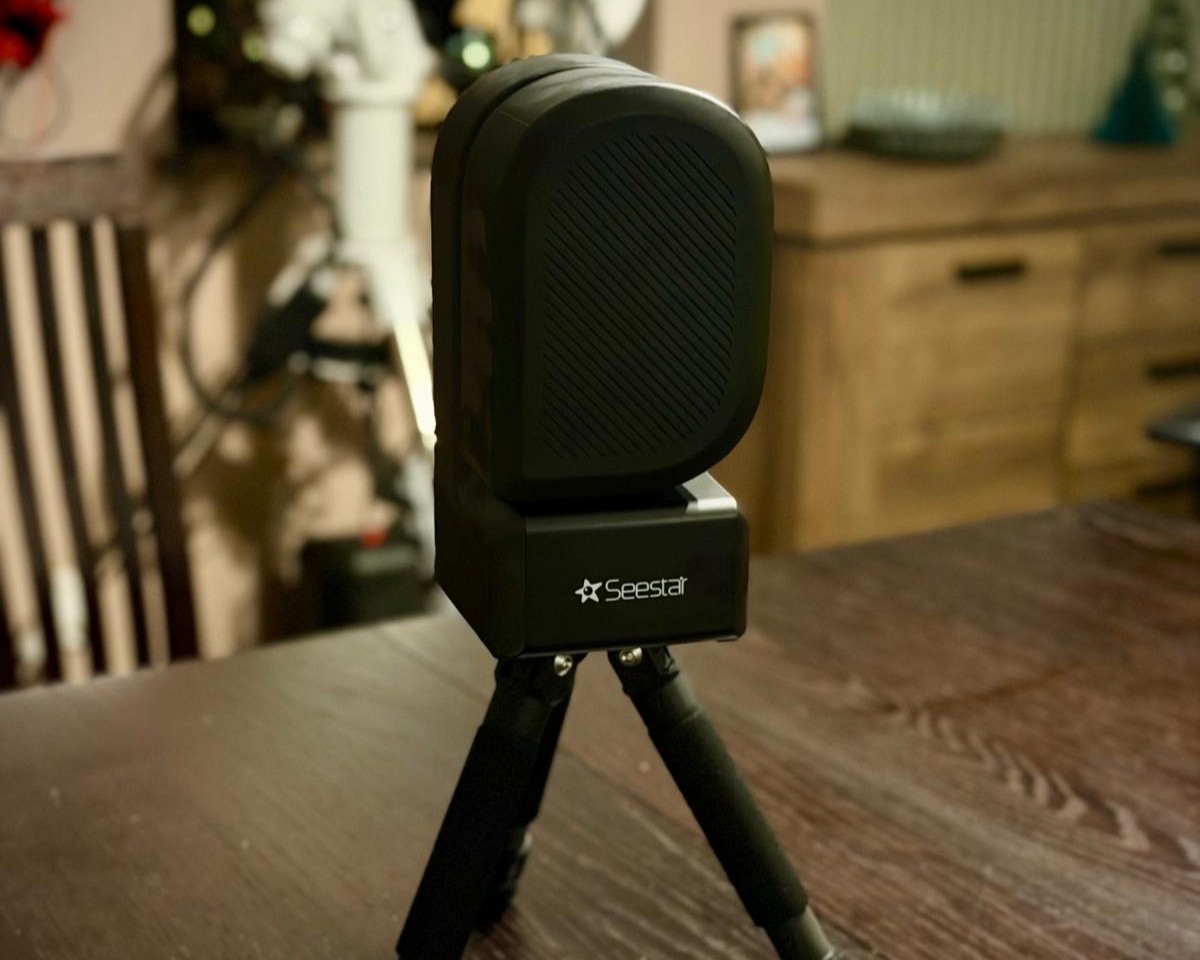
First Light with the ZWO Seestar S50
A Technical Evaluation of a Compact Astrophotography System
The first astrophotography session carried out with the ZWO Seestar S50 proved to be far more interesting than its size and class might initially suggest. The Seestar S50 is a fully integrated, highly portable all-in-one system designed around maximum automation of observation and imaging workflows. Despite this, it quickly became clear during first use that this is not merely a visual “smart telescope,” but a capable imaging tool able to produce genuinely usable astrophotographic data.
The session was conducted under reasonably typical suburban conditions, without filters and with moderate light pollution. Even so, the results were surprisingly strong—especially considering the very short total integration times involved.
ZWO Seestar S50 – Technical Specifications
…
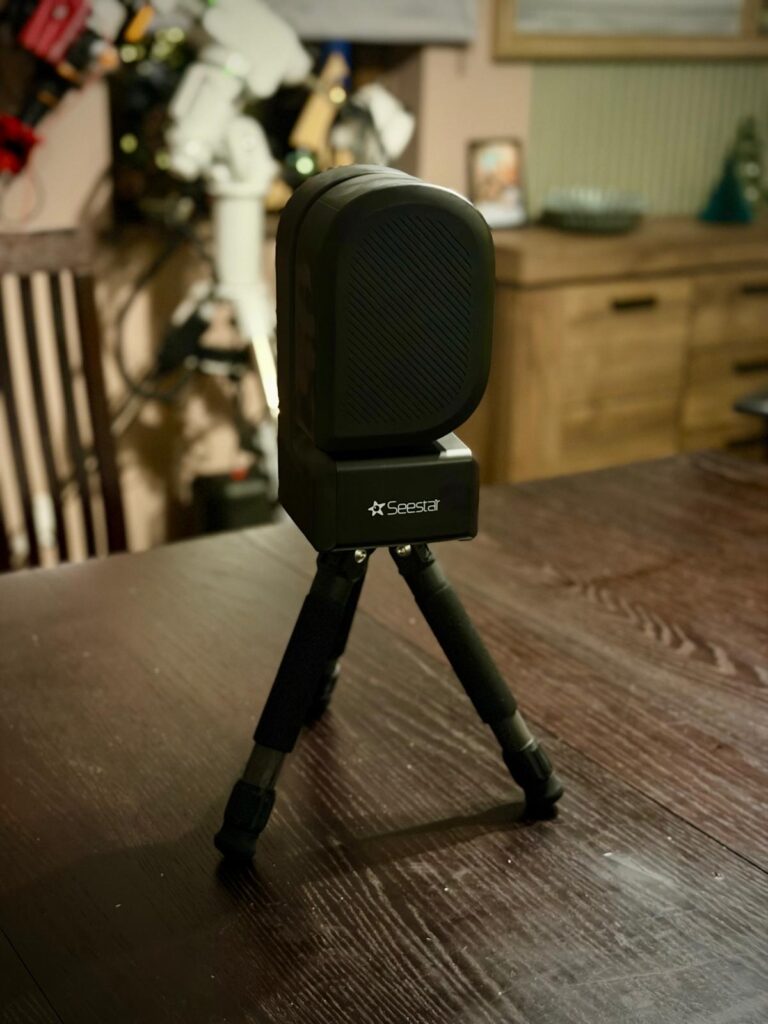
The ZWO Seestar S50 is a closed, fully integrated astrophotography platform with the following key parameters:
- Stacking: real-time live stacking
- Aperture: 50 mm
- Focal length: 250 mm
- Focal ratio: f/5
- Optical design: apochromatic refractor
- Sensor: Sony IMX462 CMOS
- Resolution: 1920 × 1080 px
- Pixel size: 2.9 µm
- Mount: fully automated alt-azimuth
- Tracking: internal image-based tracking and correction
- Control: ZWO Seestar mobile application (Android / iOS)
- With a focal length of 250 mm and a 2.9 µm pixel size, the resulting image scale is well suited for wide-field and medium-scale deep-sky objects such as emission nebulae and large galaxies.
Primary Target – The Orion Nebula (M42)
…
Messier 42 – the Orion Nebula is a classical H II emission region located approximately 1,340 light-years away within the Orion Arm of the Milky Way. As one of the brightest and most structurally rich deep-sky objects, it serves as an excellent benchmark for testing optical systems and sensors.
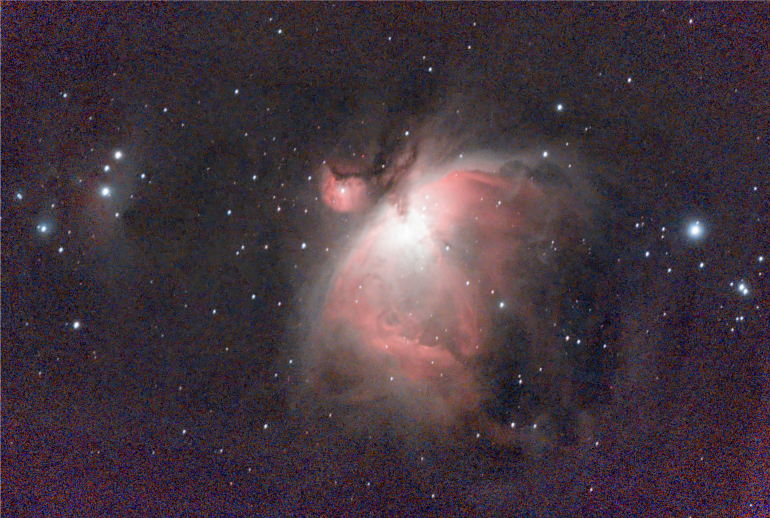
M42 after manual processing in Siril
The first image shows the Orion Nebula after manual processing in Siril. Even at the raw stacked stage, the data clearly contained a strong nebular signal. After careful histogram stretching, color calibration, and restrained noise reduction, the structure of the nebula becomes well defined.
The bright core region, the Trapezium area, and extended hydrogen emission regions are all clearly visible. The contrast between the luminous gas and surrounding dark dust lanes is preserved naturally, without aggressive manipulation of the data.
Noise is, of course, present—entirely expected given the short integration time—but it remains fine-grained and uniform. This reflects both the quality of the sensor and the effectiveness of the internal stacking algorithms employed by the Seestar S50.
Session data:
- Total integration time: 28 minutes
- Mode: live stacking
- Filters: none
- Final processing: Siril
M42 processed automatically by the ZWO Seestar app
…
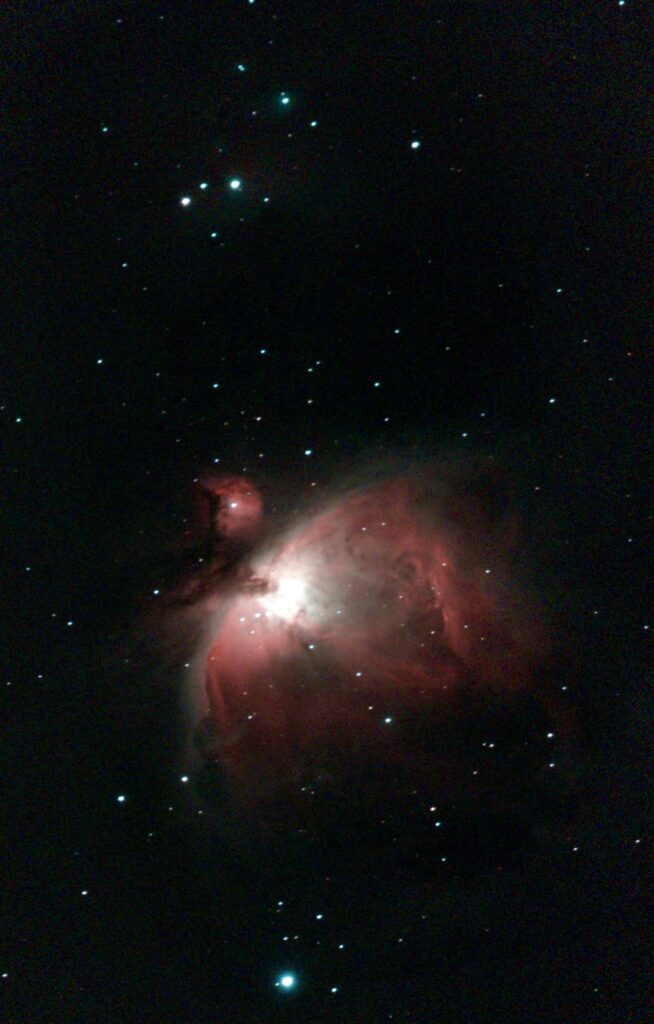
The second image presents the same target, this time generated automatically by the ZWO Seestar application during the imaging session. This is a straight-out-of-the-app result, requiring no external software or user intervention.
The app favors moderate color saturation, smooth backgrounds, and controlled highlights, resulting in a visually pleasing and immediately shareable image. Some fine structural detail is inevitably sacrificed compared to the manually processed version, but the overall aesthetic quality is remarkably high for a fully automated workflow.
This highlights one of the key strengths of the Seestar ecosystem: the ability to produce clean, attractive deep-sky images with minimal effort.
Live view during the imaging session
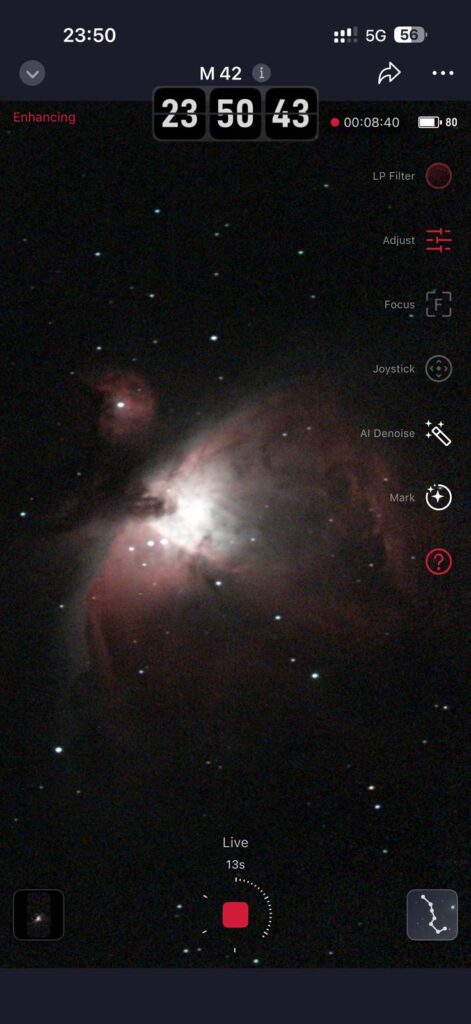
The third image is a screenshot captured with a mobile phone during the active session. It illustrates how the target gradually emerges from the background as additional frames are stacked in real time.
Within just a few minutes, the Orion Nebula was already clearly recognizable, well framed, and steadily improving in signal-to-noise ratio. The absence of noticeable drift or stacking artifacts demonstrates the effectiveness of the internal tracking system, even when operating on an alt-azimuth mount.
The Andromeda Galaxy (M31) – A Short Test Session
Another target captured during the session was Messier 31 – the Andromeda Galaxy, located approximately 2.54 million light-years from Earth and the largest galaxy in the Local Group.
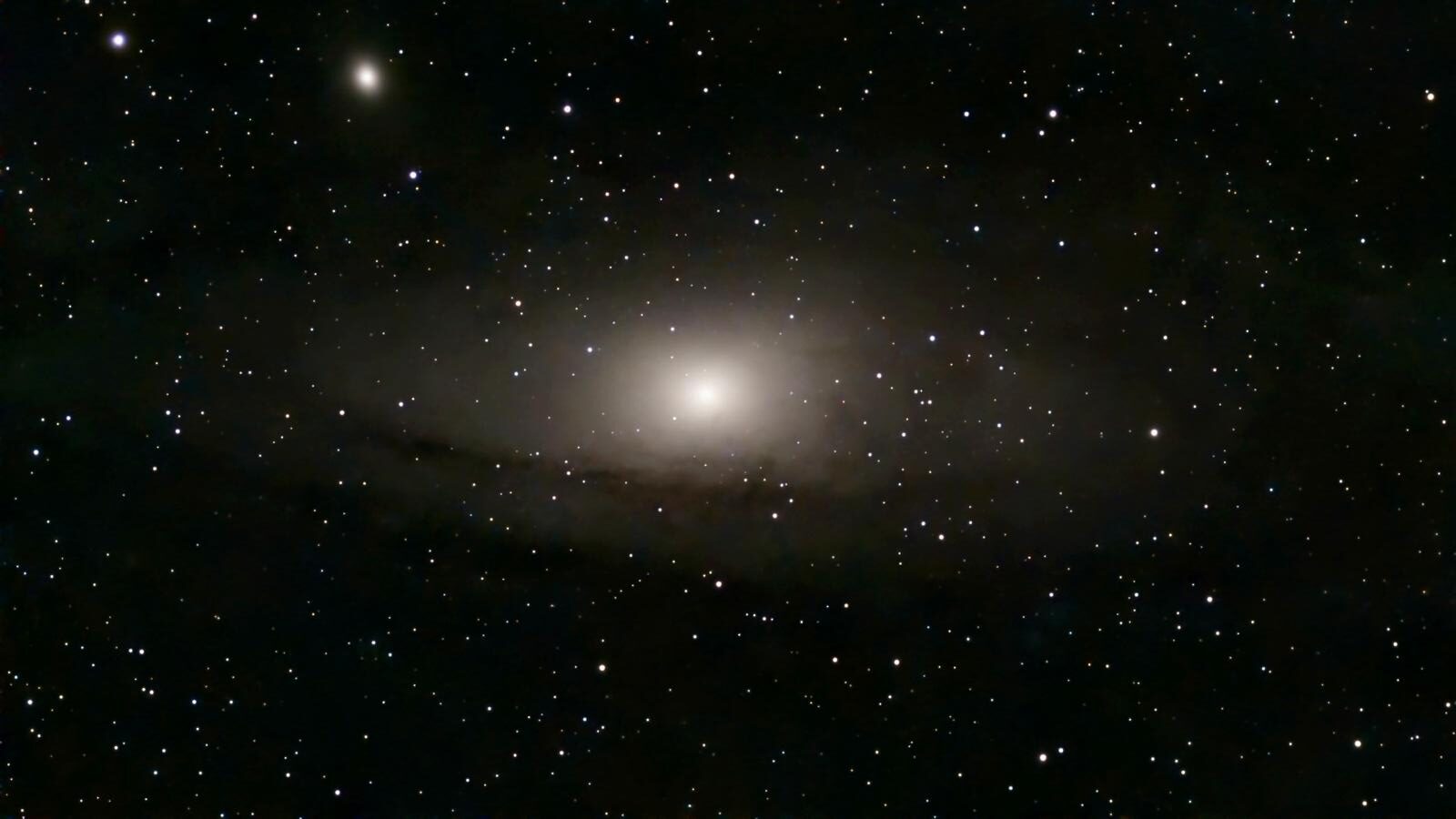
Session data:
- Total integration time: ~20 minutes
Despite the short exposure time, the bright galactic core, extended disk, and initial hints of dust lanes are already visible. For such a compact and highly automated system, this result clearly demonstrates the Seestar S50’s potential for imaging large, bright galaxies.
Planetary Observations – Jupiter and the Galilean Moons
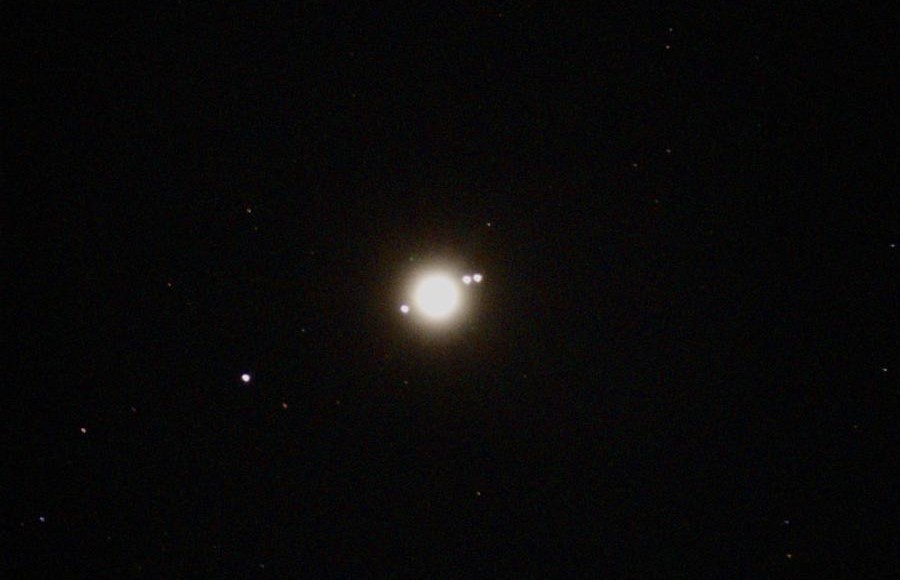
The final part of the session included live observations of Jupiter, accompanied by its four Galilean moons:
- Io
- Europa
- Ganymede
- Callisto
While the Seestar S50 is not designed for high-resolution planetary imaging, Jupiter’s disk was clearly resolved in live view, and the moons appeared as clean, well-separated points of light. This adds significant educational and observational value, particularly for outreach or casual observing sessions.
System Evaluation – An Astrophotographer’s Perspective
Strengths:
- surprisingly high data quality for short integration times
- effective real-time stacking algorithms
- stable tracking despite the alt-azimuth mount
- excellent portability and rapid deployment
- ability to export data for advanced, manual post-processing
Limitations:
- limited user control over exposure parameters
- closed system with no upgrade path
- inherent constraints in high-resolution planetary imaging
- full reliance on a mobile application
Final Assessment
This first-light session with the ZWO Seestar S50 clearly demonstrates that it is far more than a simple “smart telescope.” Even with very short integration times, the system is capable of producing data that—when processed manually—holds up surprisingly well from the perspective of an experienced astrophotographer.
While it does not replace a traditional, modular astrophotography rig, the Seestar S50 excels as a fast, portable, and low-complexity imaging solution. Its compact form factor, fully automated operation, and minimal setup requirements make it an ideal tool for field sessions, small astrophotography meetups, outreach events, or spontaneous observing nights during holidays and travel.
It is particularly well suited for situations where time, space, and logistics are limited, yet the desire to capture meaningful deep-sky data remains. In this role, the Seestar S50 fills a niche that conventional astrophotography setups simply cannot—offering real imaging capability in a truly grab-and-go format, without sacrificing technical credibility or astrophotographic satisfaction.